Church of San Pedro de Villanova: Romanesque and tradition in the Benasque Valley
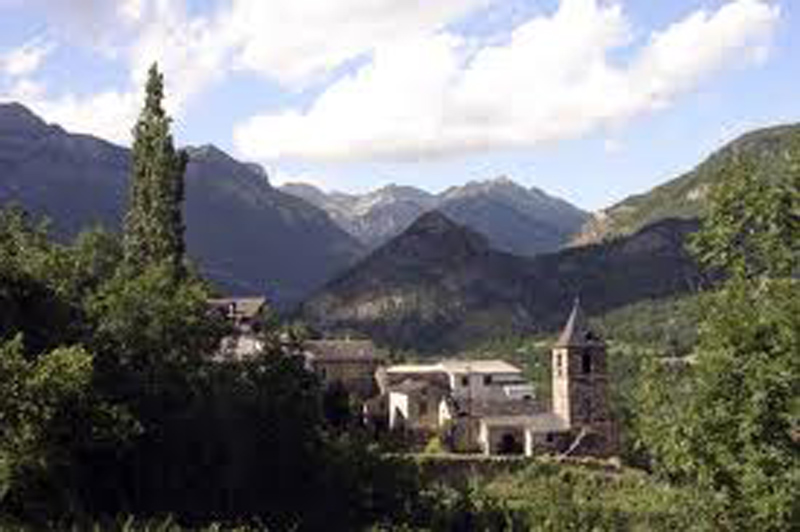
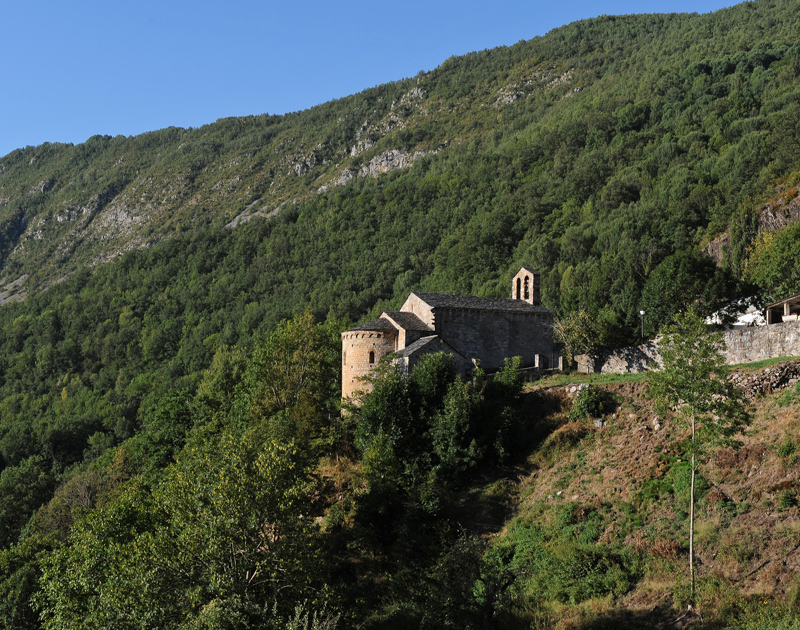
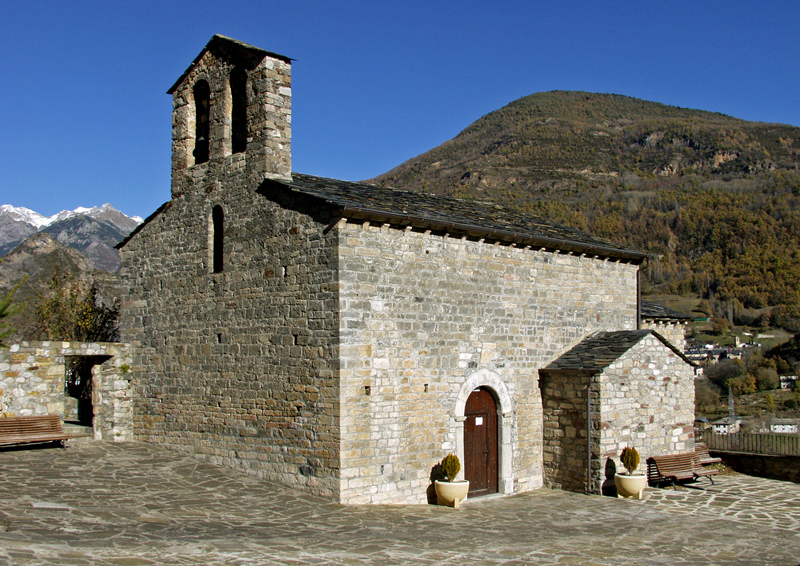
In the heart of the Benasque Valley , within the Ribagorza municipality of Villanova , stands the Church of San Pedro , one of the most representative architectural gems of the Romanesque style in the area. Built in the 12th century, it is notable for being the largest Romanesque church in the valley and for offering a unique example of the hybridization between Lombard forms, still very present in the Aragonese Pyrenees, and the innovative styles from Jaca that were beginning to be introduced at this time.
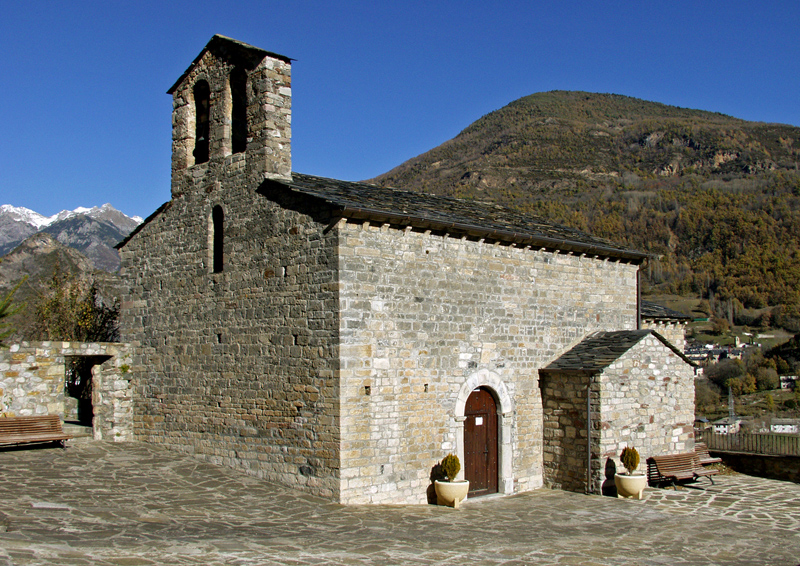
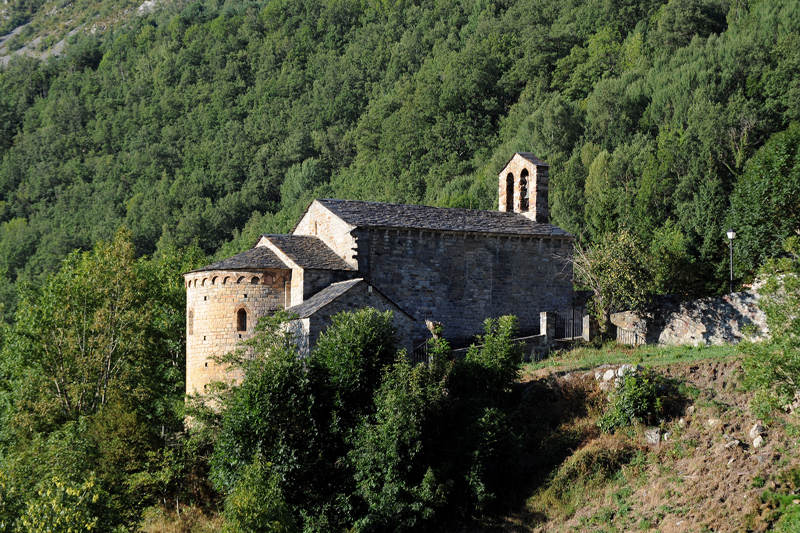
Its structure is built of well-worked ashlar masonry, laid in regular courses, giving it a solid and harmonious appearance. Over the centuries, it has undergone some modifications, such as the addition of the sacristy, which partially disrupts the unity of its original construction. The floor plan is simple, with a single nave, a well-developed chancel, and a semicircular apse facing east, following medieval liturgical tradition.
Access is gained from the south side, through a semicircular arched doorway that preserves, above the lintel, a Trinitarian chrismon sculpted in stone, considered contemporary with the door itself. This symbol, so characteristic of Aragonese Romanesque architecture, served as a protective and catechetical emblem, transmitting the Christian faith through its imagery.
At the foot of the church rises a two-arched bell gable , crowning the building's profile and lending it a rural and austere character, in keeping with the surrounding Pyrenean landscape. Inside, the semi-spherical holy water font —dating from the 17th century—features relief decoration with agave motifs and a sculpted hand supporting it from below, a detail also found in other churches in the valley, evidence of a shared local style.
The memory of the church is also preserved through old photographs, kept in the sacristy, which reveal the existence of elements that have since disappeared. Among them is a small entrance portico, with a lintel and a single-pitched roof, probably added later to protect the main entrance. There was also a choir loft at the foot of the nave, with a finely carved wooden balustrade featuring filigree and Gothic tracery, possibly from the 16th century, which was a piece of great artisanal value.
Visit and surroundings
Access to the Church of San Pedro is possible by car to the immediate vicinity, although it may be restricted at certain times. Its location in Villanova makes it an essential stop for those undertaking cultural tourism routes in Ribagorza or wishing to learn more about the history of San Pedro and the medieval art of the area.
Beyond its architectural significance, the church bears witness to the historical and religious evolution of the community, serving as a spiritual landmark for over eight centuries. For visitors, it offers the opportunity to contemplate a monument that has preserved its Romanesque essence while adapting to the needs of each era.